
Foundation Repair Guides & Homeowner Resources
Helpful information to protect your home and your investment.
Our Foundation Repair Resource Center provides Dallas–Fort Worth homeowners with expert guides, maintenance tips, repair cost information, inspection checklists, drainage advice, and educational articles to help protect your home’s foundation and make informed repair decisions.
GET A FREE FOUNDATION INSPECTION
Schedule your no-obligation foundation inspection today.
Browse Our Foundation Resources

Homeowners Foundation Resource Kit
In-depth guides on foundation problems, repairs, and prevention provide for you.
FREE DOWNLOAD ⇲

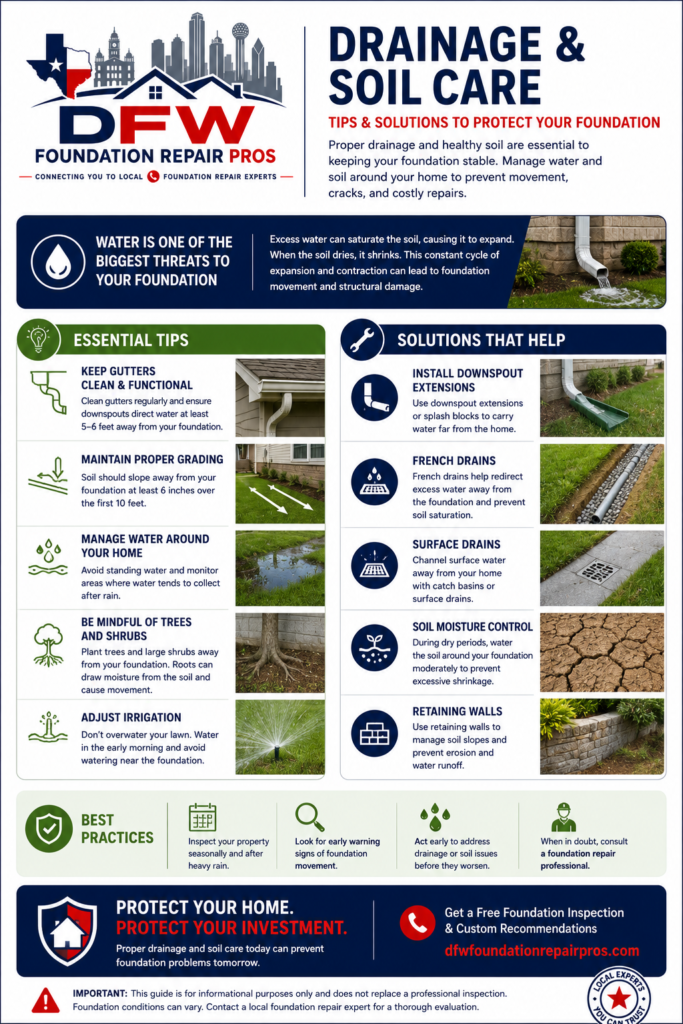
Drainage & Soil Care
Tips and solutions to manage water and soil to protect your foundation.
FREE DOWNLOAD ⇲
Foundation Repair Methods
Use our kit to guide the maintenance and repair of your homes foundation.
FREE DOWNLOAD ⇲
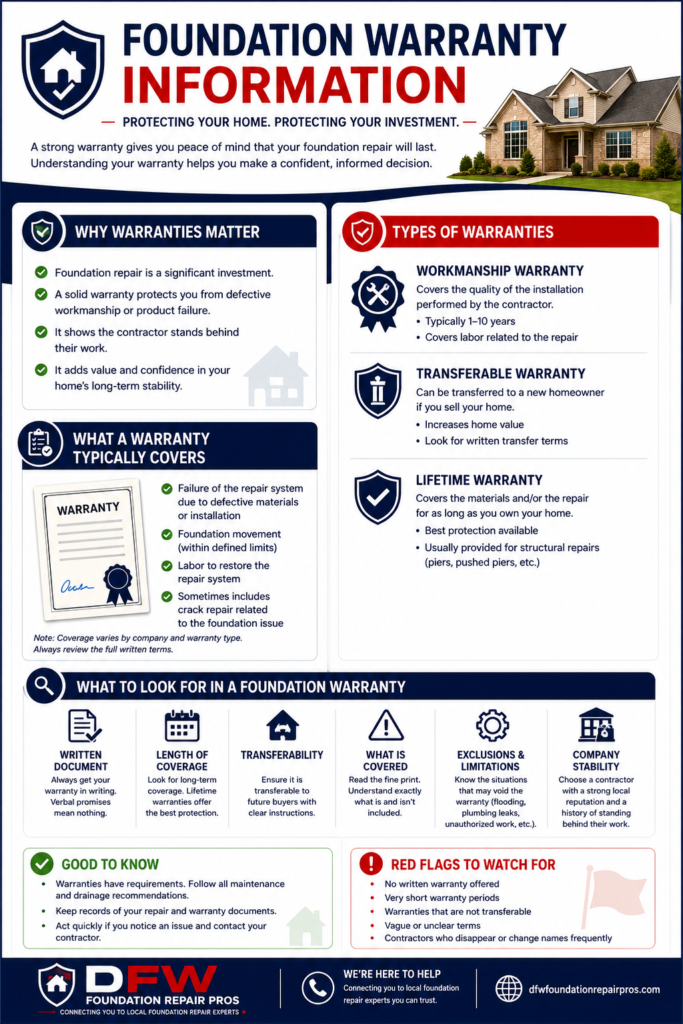
Warranty Information and what to look for.
Learn about warranties and what to look for when receiving foundation repair.
FREE DOWNLOAD ⇲
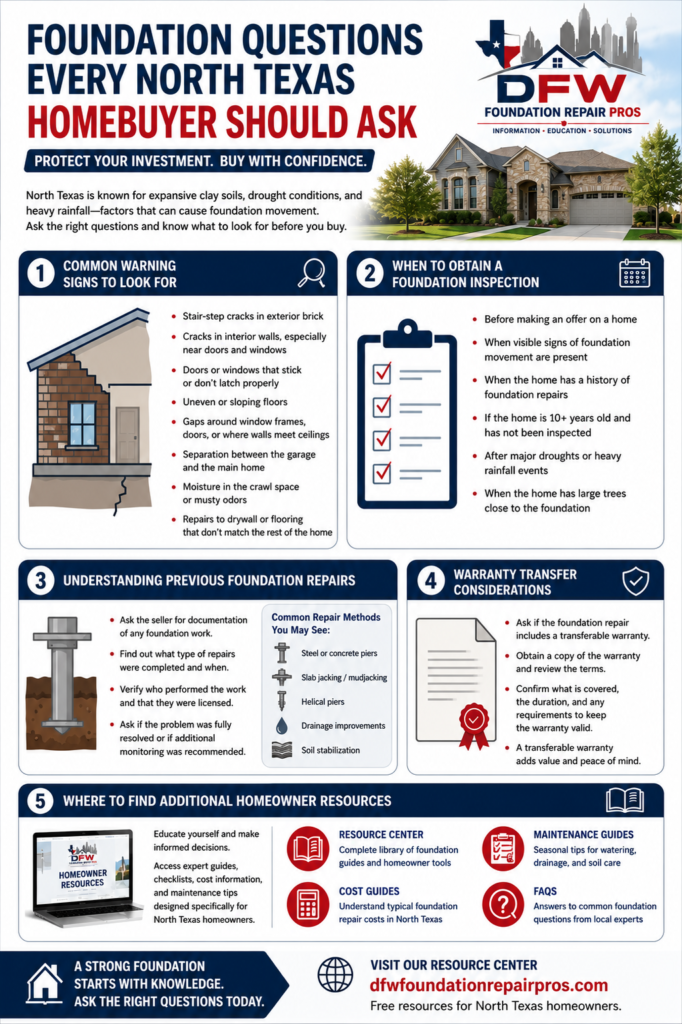
Foundation Questions Before You Buy
Learn what questions to ask about the foundation before you buy the house.
FREE DOWNLOAD ⇲
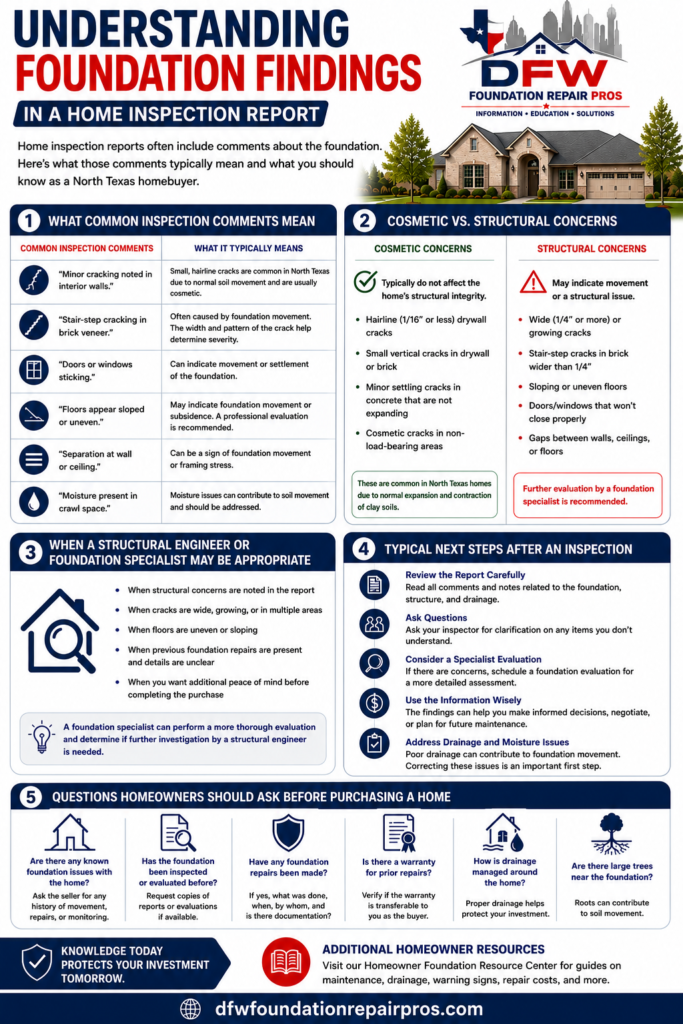
Foundation Findings in a Home Inspection
Learn what the Home Inspection says about your foundation after completion.
FREE DOWNLOAD ⇲
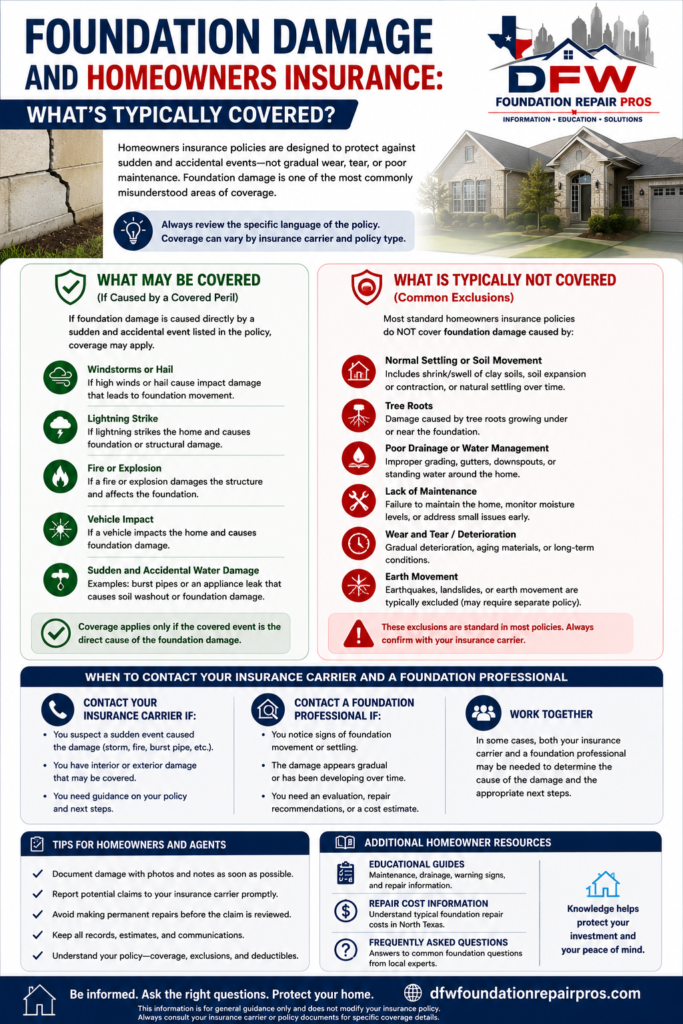
Foundation Damage and Homeowners Insurance
Understanding what is covered and what is not in a typical policy.
FREE DOWNLOAD ⇲
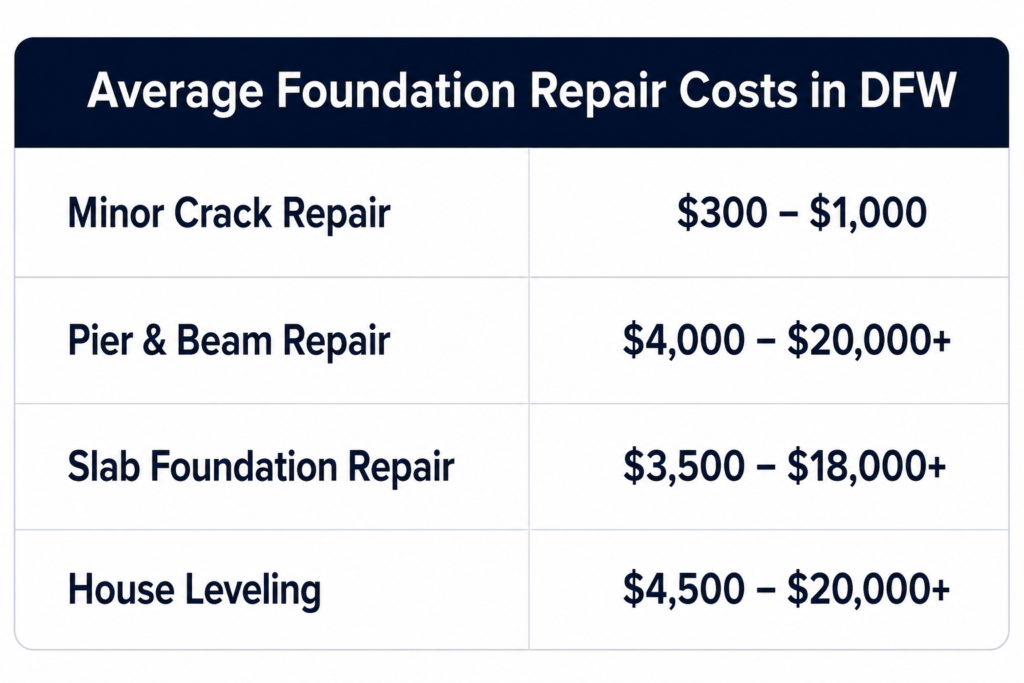
Dallas-Fort Worth Foundation Cost Guide
See Average foundation repair costs in the DFW Metroplex and what factors affect pricing.
HELPFUL TOOLS AND CHECKLIST
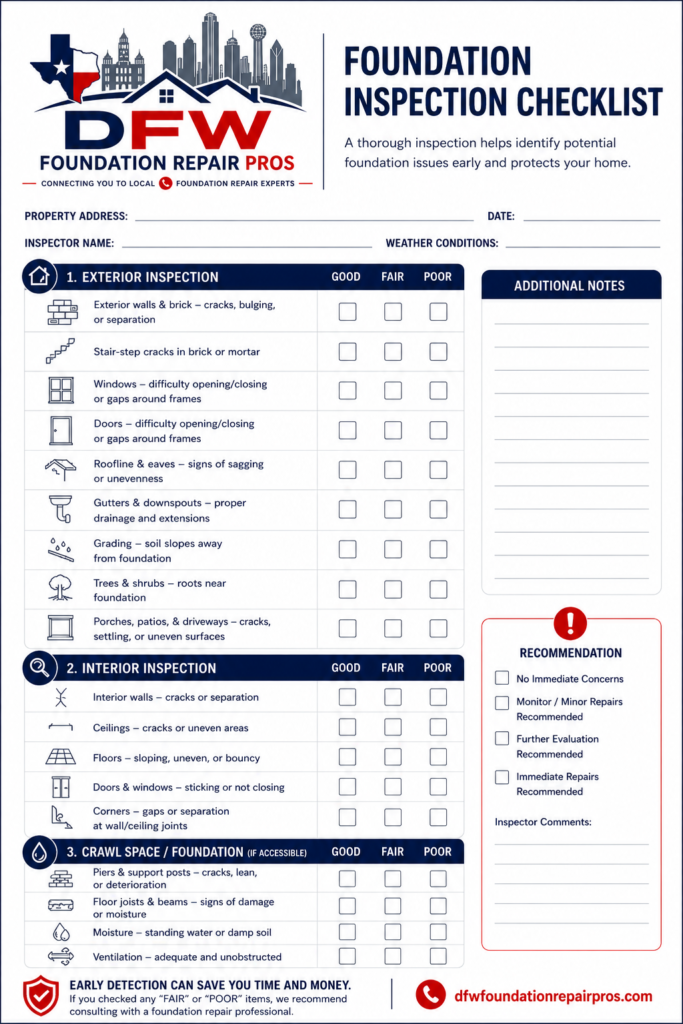
Foundation Inspection Checklist
Use our checklist to inspect your home for potential issues.
FREE DOWNLOAD ⇲
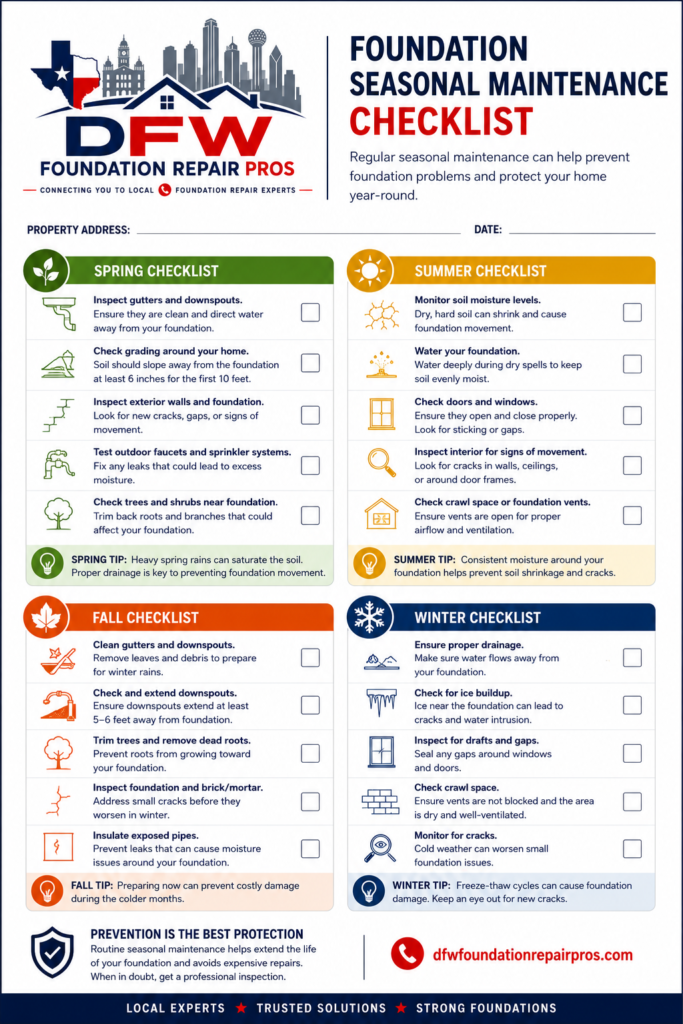
Foundation Seasonal Maintenance Checklist
Simple steps to protect your foundation year-round.
FREE DOWNLOAD ⇲
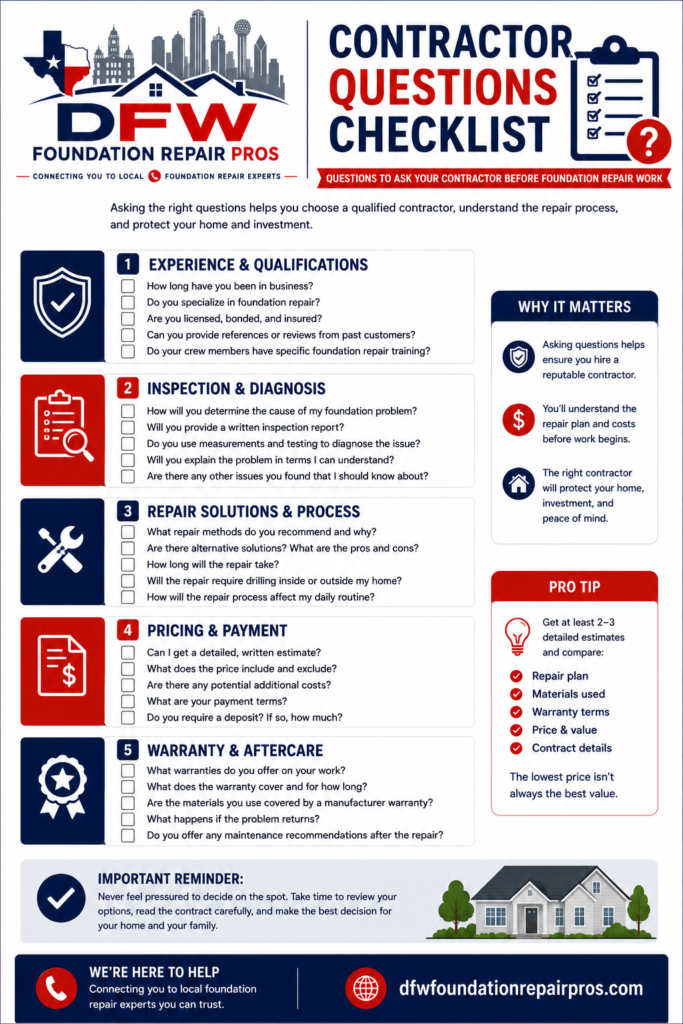
Questions to Ask Your Contractor
Make sure you hire the right foundation repair company.
FREE DOWNLOAD ⇲
COMMON FOUNDATION SERVICES IN DALLAS-FORT WORTH
HOUSE LEVELING SOLUTIONS⨠
DRAINAGE IMPROVEMENTS⨠
CRAWL SPACE SOLUTIONS⨠
SLAB FOUNDATION REPAIR⨠
PIER & BEAM REPAIR⨠
WATER-PROOFING⨠
SURFACE DRAIN SOLUTIONS⨠
FRENCH DRAIN SOLUTIONS⨠
FOUNDATION FAQ’S
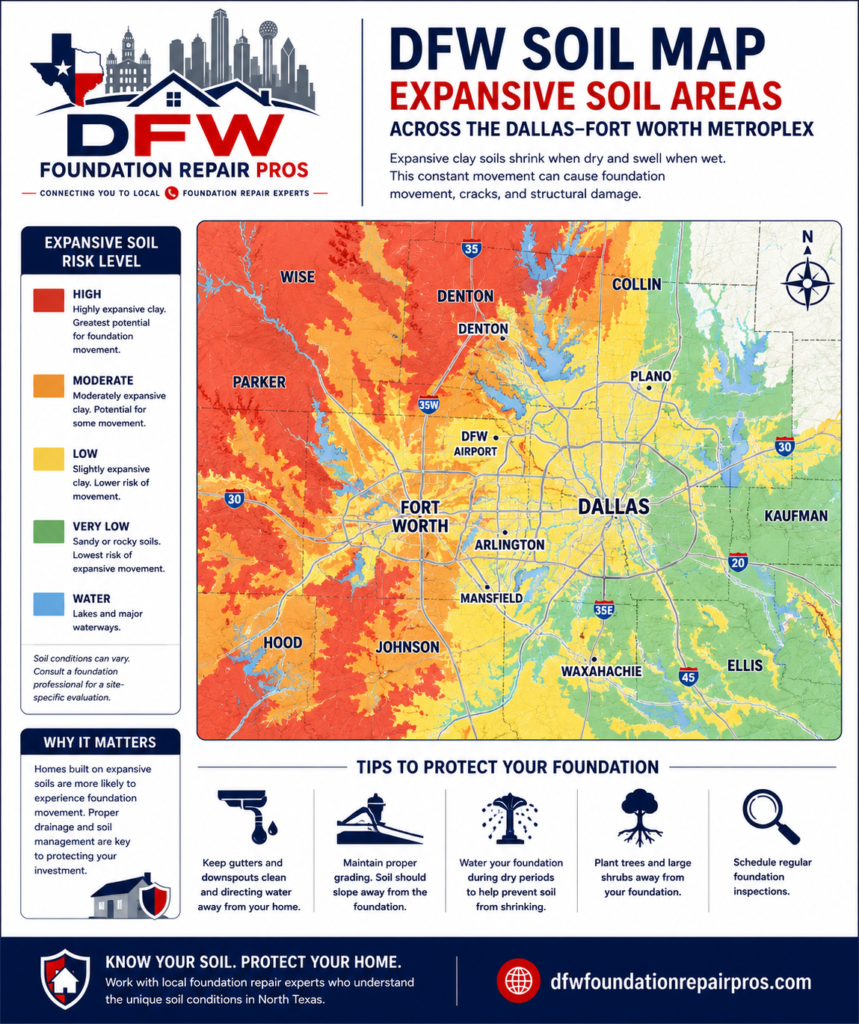
North Texas is known for its expansive clay soils, which expand when wet and shrink during drought conditions. This constant movement places stress on foundations and can lead to settlement, cracking, and uneven floors. Other common causes include poor drainage, plumbing leaks beneath the slab, improperly compacted soil, tree roots drawing moisture from the ground, and seasonal weather changes. Regular maintenance, proper drainage, and consistent foundation watering can help minimize movement and reduce the risk of costly foundation repairs.
Foundation repair costs vary depending on the type and severity of the problem. Minor repairs may cost a few thousand dollars, while larger stabilization projects involving multiple piers or structural repairs can cost significantly more. Factors that affect pricing include the size of the home, foundation type, accessibility, soil conditions, and the repair method used. The best way to determine the appropriate solution and cost is through a professional foundation inspection and written estimate.
It’s a good idea to schedule a foundation inspection whenever you notice new cracks, sticking doors or windows, uneven floors, or signs of foundation settlement. Homebuyers and sellers should also consider an inspection before completing a real estate transaction to identify potential structural concerns. Even if no obvious problems exist, homeowners in North Texas may benefit from a periodic inspection every few years because expansive clay soils can cause gradual movement over time.
While no foundation is completely immune to movement, many problems can be minimized through proper maintenance. Maintaining consistent soil moisture, installing effective drainage, directing downspouts away from the foundation, repairing plumbing leaks promptly, and avoiding excessive drying around large trees can all help reduce soil movement. Routine inspections and seasonal maintenance are among the best ways to protect your home’s foundation and avoid more extensive repairs later.
Not every crack requires immediate repair, but every new crack should be evaluated. Hairline cosmetic cracks are common in many homes, while wider or expanding cracks may indicate foundation movement. Stair-step brick cracks, large interior wall cracks, or cracks accompanied by sticking doors and uneven floors should be inspected promptly. Addressing potential foundation issues early often helps prevent additional structural damage and more costly repairs.
Before hiring a contractor, ask about their experience, repair methods, warranty coverage, licensing, insurance, and whether they provide detailed written estimates. Request references from recent projects, ask if permits are required, and understand exactly what work is included in the proposal. It’s also wise to compare multiple estimates and ensure the contractor explains why a particular repair method is recommended for your home’s specific foundation conditions.
Homeowners should visually inspect their foundation at least twice a year, particularly after periods of severe drought or heavy rainfall. Look for new interior or exterior cracks, sticking doors and windows, uneven floors, gaps around trim, or drainage issues around the home’s perimeter. In North Texas, where expansive clay soils are common, seasonal changes can cause noticeable foundation movement. Regular inspections, combined with proper drainage and consistent watering practices, can help identify problems early and protect your home’s long-term structural stability.
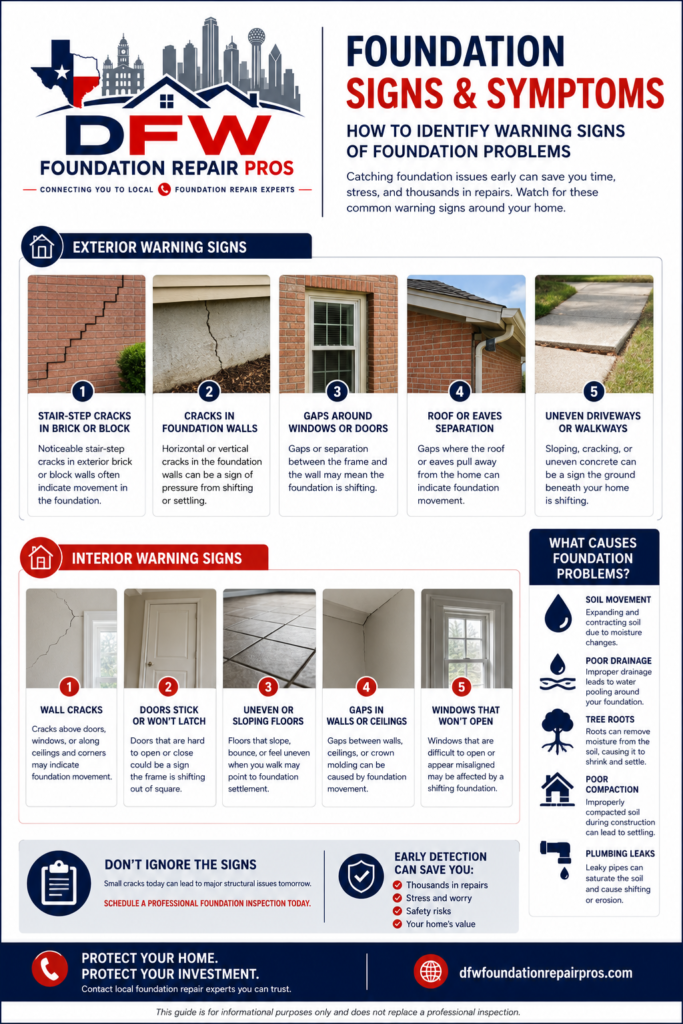
Early signs of foundation movement often include small interior drywall cracks, stair-step cracks in exterior brick, doors or windows that begin sticking, uneven or sloping floors, gaps around window frames, and separation between walls and ceilings. These symptoms may develop gradually over time as soil expands and contracts beneath the home. Addressing these warning signs early can help identify minor issues before they become more extensive and expensive structural repairs.
Still have Questions?
If you’re concerned about foundation movement, cracks, drainage, or settlement, schedule a no-obligation foundation inspection. Our local professionals can help evaluate your home’s condition and recommend the appropriate solution.
Schedule Your Inspection!
Local, trusted professional contractors
Competitive pricing & free estimates
Most work backed by warranty
No Obligation
Proudly serving Dallas-Fort Worth Metroplex!
Find More Home Services: