
Pier and Beam Foundation Repair
Address sagging floors, and structural issues in pier and beam foundations.
How do I know if I have a Pier and Beam Foundation?
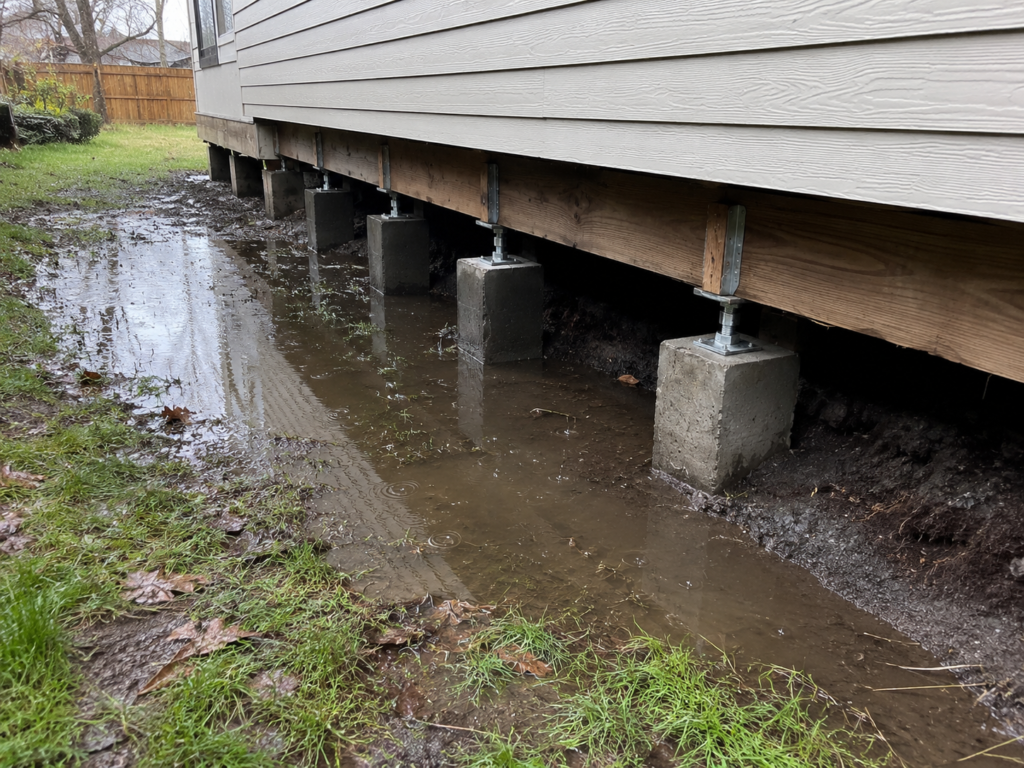
Pier and beam homes are built above the ground and have a crawl space beneath the floor. If you can access an area under your home and see wooden beams, floor joists, concrete piers, or support posts, your home likely has a pier and beam foundation.
Signs of Pier and Beam Foundation Repair Needs
Cracks in Brick or Masonry
Sticking Doors & Windows
Uneven or Sloping Floors
Cracks in Walls or Ceilings
Moisture or Musty Odors
Sagging or Bouncy Floors
Areas Served
Common signs may include sagging or uneven floors, bouncing floors, gaps around doors or trim, sticking doors and windows, cracked interior walls, or visible deterioration of support beams, joists, or piers within the crawl space.
Pier and beam foundation issues can result from moisture intrusion, poor drainage, wood rot, shifting soil, deteriorated support piers, pest damage, or normal aging of structural components. These conditions can affect the stability and levelness of the home.
Yes. Excess moisture beneath a home can contribute to wood rot, mold growth, soil movement, and deterioration of support components. Proper drainage and moisture control are important factors in maintaining the long-term performance of a pier and beam foundation.
Repair methods vary depending on the condition of the foundation and may include replacing damaged beams or joists, installing or adjusting support piers, reinforcing structural components, correcting crawl space moisture issues, or performing house leveling to restore proper support.
If you notice sagging or uneven floors, bouncing floors, gaps around doors or trim, or sticking doors and windows, don’t wait. Early evaluation can help prevent more costly problems down the road.
Understanding and Installing Drainage Systems – Texas A&M AgriLife Extension Service